
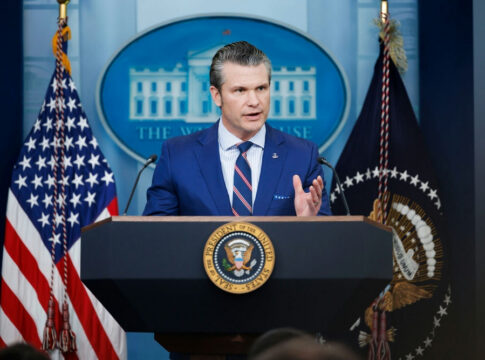
Defense Secretary Pete Hegseth’s Pentagon briefing response to an Iranian AI-generated video has been twisted into a narrative he never actually endorsed—exposing how quickly propaganda gets weaponized by all sides in the information age.
When Propaganda Meets Counter-Propaganda
The Iranian embassy distributed an AI-generated video depicting Jesus Christ violently attacking President Donald Trump and casting him into hell. During a Pentagon press briefing, reporters asked Defense Secretary Pete Hegseth to respond. His answer was straightforward: the video was “disgusting and detached from reality,” nothing more than Iranian propaganda designed to sow discord. Hegseth urged Iran to negotiate instead of spreading lies. The response was measured, factual, and entirely appropriate for a defense official addressing enemy disinformation during a briefing about Iranian-linked drone and missile attacks on Gulf State civilians.
Yet the characterization that Hegseth was “doubling down on portraying Trump as Jesus” misrepresents what actually happened. Hegseth criticized an anti-Trump video—he never suggested Trump was divine. The confusion stems from conflating two separate incidents: Hegseth’s briefing response and Trump’s own controversial social media post. These are distinct events involving different actors with different motivations, yet they’ve been blended into a single misleading narrative that serves neither truth nor understanding.
Trump’s Deleted Image and the Pope Controversy
Around the same time, President Trump posted an AI-generated image showing himself in a Jesus-like pose, appearing to heal a man. The image sparked immediate backlash, particularly among religious conservatives who saw it as blasphemous idolatry—a violation of the First Commandment’s prohibition against making graven images or placing anyone above God. Trump deleted the post after approximately twelve hours, later claiming the image depicted him as a Red Cross doctor providing humanitarian aid, dismissing criticism as “fake news.” The explanation convinced few, as the visual clearly mimicked Christian iconography of Christ the Healer.
This incident coincided with growing tensions between Trump and Pope Leo. The Pope had criticized prayers for “overwhelming violence” during a Palm Sunday sermon, an apparent reference to Hegseth’s earlier public prayer against war opponents. Trump responded with personal attacks, calling the Pope “weak on crime” in late-night social media posts. Vice President JD Vance defended Trump, telling the Pope to “stick to morality”—an ironic admonition given the religious imagery controversy. The Vatican-White House rift deepened a cultural divide already straining relationships between traditional religious institutions and populist political movements.
The AI Disinformation Battlefield Expands
Iranian state media has increasingly deployed AI-generated content as asymmetric information warfare. The tactic exploits America’s open media ecosystem and religious sensitivities to amplify division. Previous Iranian psychological operations included denying missile strikes despite video evidence and spreading fabricated quotes from U.S. officials. The Jesus-Trump video represents an escalation—using sacred religious imagery to attack a sitting president while simultaneously baiting American officials into defensive responses that can be misconstrued. It’s sophisticated propaganda designed to create no-win scenarios for U.S. communicators.
The effectiveness of such tactics depends on muddying the waters between legitimate criticism and hostile disinformation. When Hegseth called out Iranian lies, he performed his duty. When media coverage suggests he endorsed messianic Trump imagery, the propaganda mission succeeds—not because Iran convinced anyone Trump is Jesus, but because it generated confusion, distrust, and internal conflict. The real danger isn’t that Americans will believe Iranian deepfakes, but that they’ll lose the ability to distinguish between what officials actually say and how their words get repackaged for partisan consumption.
AI-generated religious propaganda poses unique challenges for democratic societies that value both free expression and religious liberty. Unlike traditional disinformation about policy or events, weaponized sacred imagery strikes at identity and belief systems. It’s designed to offend, provoke, and divide along fault lines that already exist within American society—between those who see Trump as a flawed but effective leader and those who view any messianic comparisons as dangerous idolatry. Foreign adversaries don’t need to convince either side; they simply need to widen the gap between them.
Sorting Facts From Manufactured Outrage
The factual record shows Hegseth dismissed enemy propaganda while Trump separately posted religious imagery he later retracted. Neither incident supports the claim that Pentagon leadership is “portraying Trump as Jesus.” That narrative requires ignoring what Hegseth actually said, conflating unrelated events, and assuming malicious intent where simpler explanations exist. Trump’s image was self-generated and quickly deleted amid criticism—hardly evidence of a coordinated deification campaign. Hegseth’s briefing remarks addressed Iranian psychological operations, not American theology. The story falls apart under basic scrutiny, yet it persists because it confirms pre-existing suspicions on both political extremes.
What remains true is that AI technology has weaponized religious imagery in propaganda warfare, creating challenges previous generations never faced. Deepfakes require minimal resources to produce but maximum effort to debunk. By the time fact-checkers verify what’s real, the manufactured controversy has already shaped opinions. Iran benefits whether Americans believe the video or simply argue about it endlessly. The solution isn’t censorship or defensive overreach—it’s developing cultural antibodies to recognize manipulation when it appears, regardless of which side deploys it. That requires intellectual honesty about what actually happened versus what we wish had happened to validate our preferred narratives.
Sources:
Democracy Now – Pope Leo, Trump, and Iran War Tensions