
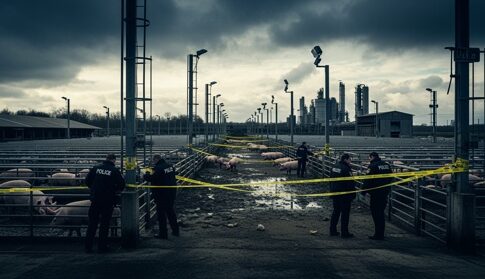
Ukraine’s military intelligence says Russian forces have buried anthrax-infected cattle carcasses at up to 50 sites across occupied Kherson — some less than a mile from homes — and may be planning to use those sites to frame Ukraine for a biological attack.
Story Highlights
- Ukraine’s Main Intelligence Directorate identified up to 50 burial sites for anthrax-infected livestock in occupied Kherson, with 10 rated as high-risk.
- Sites near Askania-Nova, Skadovsk, and Zaliznyi Port sit within one kilometer of homes, with high groundwater that could spread contamination.
- Ukrainian intelligence calls the act “biological terrorism” and warns Russia may stage a false-flag incident to blame Ukraine.
- Russia denies the claims, and no neutral international body has been able to enter the occupied zone to verify them independently.
What Ukraine’s Intelligence Found
On June 23, 2026, Ukraine’s Main Intelligence Directorate (known by its Ukrainian acronym GUR) announced that Russian forces have been transporting and burying anthrax-infected livestock carcasses in occupied Kherson without following any sanitary standards. GUR identified up to 50 burial sites. Ten of those sites — near the settlements of Askania-Nova, Skadovsk, and Zaliznyi Port — are considered especially dangerous.
Ukraine’s Defense Intelligence agency added key details. The sites have no fencing, sit within one kilometer of homes, and are located in areas with high groundwater levels. That combination raises the risk of anthrax spores seeping into the water supply and spreading to nearby residents. Anthrax is a deadly bacterial disease. Its spores can survive in soil for decades and are considered one of the most serious biological threats known to science.
A Deliberate Act — or a Setup for a False Flag?
GUR and Ukraine’s Defense Intelligence jointly called the burials “biological terrorism” against civilians living under Russian occupation. But the warning goes further than just disease risk. Ukrainian intelligence says Russia may be planning to blow up one or more of these sites and then accuse Ukraine of running a biological weapons program — a classic false-flag move designed to shift blame and generate propaganda. That kind of operation would combine a physical attack with an information campaign to muddy the story internationally.
Russia’s government flatly denies the allegations. State media outlets and the Russian Ministry of Foreign Affairs have called the claims fabrications. However, Russia has not provided any lab results, disposal records, or satellite data to back up its denials. The counter-argument from Moscow is a blanket denial — not a factual rebuttal of the specific sites and conditions Ukraine named.
Why Independent Verification Is Blocked
The World Health Organization and the Organization for the Prohibition of Chemical Weapons cannot enter Russian-occupied Kherson without Moscow’s permission. Russia has not granted that permission. So no neutral international body has physically inspected the burial sites, tested soil or water samples, or confirmed the presence of anthrax. That access problem is the single biggest obstacle to settling this dispute with hard evidence.
Ukrainian intelligence has revealed that Russian forces are deliberately dumping anthrax-infected cattle carcasses near residential areas and groundwater sources in the occupied Kherson region, creating conditions for biological outbreaks. #News
— Dubon007 (@gdubon007) July 7, 2026
This situation fits a pattern seen in past conflicts. Biological warfare allegations are difficult to prove quickly, especially when one side controls the ground. The same dynamic played out during the Korean War, when accusations of biological weapons use flew back and forth for years without resolution. What makes the Kherson case different is the level of geographic detail Ukraine has provided — named towns, site counts, and specific environmental risk factors — which goes well beyond vague wartime accusation.
What This Means for the Bigger Picture
If Ukraine’s intelligence is accurate, Russian forces are deliberately endangering civilians in territory they control — the very people they claim to be protecting. Burying infected carcasses near homes and water sources, without fencing or safety measures, puts local residents at direct risk of a deadly disease outbreak. That is not a side effect of war. It is a choice.
For Americans watching the conflict, this is a reminder of what kind of actor Russia is. The Trump administration has pushed for a negotiated end to the war. Any peace deal needs to account for the fact that Russia is accused of using biological hazards as a weapon against civilians — and that it blocks the international inspectors who could prove or disprove that claim. Letting that behavior go unaddressed sets a dangerous precedent for every conflict that follows.
Sources:
feedpress.me, euromaidanpress.com, nypost.com, united24media.com, cissm.umd.edu