
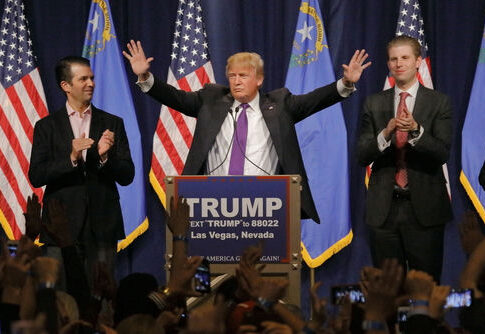
Eric Trump’s open skepticism about the FBI’s probe into his father’s would-be assassin has ignited a firestorm of conspiracy theories, casting fresh doubt on the integrity of high-stakes investigations and leaving Americans wondering who can be trusted.
Eric Trump has demanded investigators finally solve the mystery behind gunman Thomas Crooks who tried to assassinate his father at a Pennsylvania rally last year
'I'm very far away from being a conspiracy theorist, but nothing about it looks right'https://t.co/vHgwMnRIcy pic.twitter.com/7DILbeWOFj
— Video Forensics (@Video_Forensics) November 6, 2025
Eric Trump’s Challenge to the Official Narrative
After the FBI confirmed the shooter, Thomas Matthew Crooks, acted alone, Eric cast doubt on the official story, declaring, “Nothing about it looks right.” In a later comment, he added that he had made it clear “he wasn’t buying the story,” reinforcing his skepticism toward the bureau’s conclusions.
The timing of his remarks suggests a deliberate effort to challenge law enforcement’s narrative before public opinion could settle. Eric’s skepticism not only questions the facts but also the intentions behind the investigation, inviting millions to scrutinize every detail for signs of a cover-up.
When Americans went to @Google for information after President Trump survived an assassination attempt, nothing came up.
If you searched "President Donald," @Google prompted Donald Duck or Donald Reagan.
This is blatant political bias. pic.twitter.com/gIeSahPOa1
— Eric Schmitt (@Eric_Schmitt) October 30, 2025
Eric’s assertion quickly became a rallying cry for those distrustful of government institutions, with social media amplifying his message far beyond traditional media’s reach.
Hashtags and viral posts speculated wildly about Crooks’s background and possible connections, even as the FBI maintained that Crooks acted alone. For many conservatives, Eric’s challenge resonates as common sense—why accept an official account when so many questions remain unanswered?
Ripple Effects: Trust, Division, and the Role of Media
The Trump family, already shaken by the violent attack, now faces an onslaught of rumors and theories that threaten to overshadow the facts. Media outlets, caught between reporting official statements and chasing viral stories, struggle to strike a balance. Some conservative commentators applaud Eric’s boldness, seeing his challenge as a necessary check on government overreach. Others, including liberal voices, accuse him of deliberately undermining the investigation for political gain.
Long term, the proliferation of conspiracy theories could reshape how Americans respond to future crises. If every major event breeds suspicion and division, law enforcement’s ability to maintain order and credibility will be further compromised. Social polarization is not merely a byproduct—it’s a driving force, with both sides digging in as facts become secondary to belief. Experts warn that without a renewed commitment to transparency and factual reporting, these cycles of doubt and mistrust will only intensify, making consensus nearly impossible in moments that demand unity and clarity.
Sources:
Wikipedia: Attempted assassination of Donald Trump in Pennsylvania
Northeastern University: Conspiracy Theories Research Trump Assassination
Star Tribune: Three days after attempted assassination, Trump shooter remains an elusive enigma
Congress.gov: House Event Text