
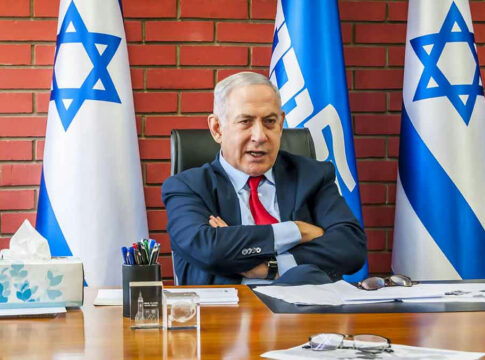
Israeli Prime Minister Benjamin Netanyahu just announced Israel will eliminate its dependency on the $3.8 billion annual U.S. military aid package within the next decade, a declaration that could reshape seven decades of Middle Eastern geopolitics and force American taxpayers to reconsider what they’re funding overseas.
The Audacious Declaration That Shocked Washington
Netanyahu’s emphatic statement on national television caught both Israeli defense officials and American policymakers off guard. The prime minister didn’t mince words when he declared it was time to wean Israel off remaining military support, telling CBS interviewer that he’d already discussed the concept with President Trump. His tone conveyed determination rather than consultation, suggesting this represented more than typical diplomatic posturing. The Israeli leader even noted that jaws dropped among his own officials when he broached the subject internally, revealing the proposal’s controversial nature even within his government.
The timing proves significant given that the current Memorandum of Understanding expires in 2028, providing a natural pivot point for renegotiation. Netanyahu’s insistence on beginning immediately rather than waiting for the next Congress suggests urgency beyond mere fiscal planning. This declaration arrives as Israel’s defense budget approaches $24 billion annually, with the American contribution representing roughly 16 percent of total military spending. The math increasingly favors Israeli independence, particularly as the nation’s arms export industry rivals the aid amount it receives.
From Post-War Dependence to Economic Powerhouse
U.S. military assistance to Israel evolved from modest post-1948 loans into substantial grants following the 1967 Six-Day War. The relationship transformed fundamentally after Israel demonstrated military competence and strategic value during the Cold War. The current framework emerged from a 2016 agreement signed under President Obama, guaranteeing $38 billion over ten years through 2028. This replaced an earlier 2007 memorandum and included $3.3 billion in Foreign Military Financing plus $500 million for missile defense systems annually.
What changed the equation wasn’t just Israeli military prowess but economic transformation. The Abraham Accords of 2020 normalized relations with UAE and Bahrain, opening massive commercial opportunities across the Gulf region. Israeli technology firms secured billions in contracts with former adversaries, while defense partnerships blossomed where hostility once reigned. A $3 billion UAE arms agreement in 2025 exemplified how regional dynamics shifted from Cold War alignments to pragmatic economic partnerships based on shared concerns about Iranian expansion.
Winners and Losers in the Aid Elimination
American defense contractors like Lockheed Martin and Raytheon stand to lose substantially if Netanyahu follows through. The aid package includes a “buy American” provision requiring Israel to spend the funds on U.S.-manufactured weapons systems, effectively functioning as a subsidy for domestic defense industries. Approximately $3 billion annually flows back into American factories producing F-35 fighters, precision munitions, and missile defense components. Industry estimates suggest over 10,000 jobs connect directly to Israeli military contracts funded by taxpayer dollars.
For Israel, the calculus tilts toward independence despite short-term procurement challenges. Israeli defense firms like Israel Aerospace Industries and Rafael Advanced Defense Systems already compete globally, generating $13 billion in exports during 2025. Eliminating aid dependency removes American leverage on contentious issues like settlement expansion and Palestinian relations. Netanyahu’s domestic arms industry can absorb increased demand while accelerating research and development on systems like the Arrow missile defense platform. The GDP boost from retained capital and expanded Gulf partnerships could reach one to two percent annually.
The Conservative Case for Ending the Aid
From an America First perspective, Netanyahu’s proposal deserves serious consideration rather than reflexive opposition. Conservatives have long advocated for reducing foreign entanglements and overseas expenditures that don’t directly benefit American citizens. Israel’s transformation into a wealthy nation with $55,000 GDP per capita raises legitimate questions about perpetual aid to a prosperous ally. The Heritage Foundation noted that self-reliance aligns with conservative principles of independence and fiscal responsibility, both for nations and individuals.
The $40 billion savings over the next decade could fund border security, infrastructure improvements, or tax relief for American families struggling with inflation. Critics who claim this weakens the U.S.-Israel relationship miss the fundamental point that genuine alliances rest on shared values and strategic interests, not financial dependency. Egypt and Jordan successfully phased down their U.S. aid without severing diplomatic ties. A mature partnership between equals serves American interests better than a patron-client relationship that breeds resentment and entitlement.
Skepticism and Strategic Concerns Remain
Not everyone embraces Netanyahu’s vision with enthusiasm. Former Defense Department official Dov Zakheim argued the move hurts American industry more than it helps Israel, noting that aid dollars recycle through U.S. manufacturing facilities and support domestic employment. Aaron David Miller from the Carnegie Endowment dismissed the proposal as largely symbolic, predicting Washington won’t cut aid without extracting significant concessions on regional diplomacy. Israeli opposition leader Yair Lapid called the plan reckless given ongoing threats from Iranian proxies and regional instability.
Netanyahu Says Israel Plans to ‘Wean Ourselves Off’ U.S. Military Aid Over Next 10 Years (VIDEO)
READ: https://t.co/DRMRFU4dZv pic.twitter.com/IruepLvlko
— The Gateway Pundit (@gatewaypundit) May 11, 2026
The Brookings Institution raised security concerns about reducing American leverage during a period of heightened Middle Eastern tensions. Professor Trevor Thrall from George Mason University noted that eliminating aid removes one of Washington’s few remaining tools for influencing Israeli settlement policy. Yet Congressional Research Service analysis suggests Israel already funds 70 percent of its defense domestically, making the transition feasible if economic growth maintains a three percent annual rate. The question isn’t whether Israel can survive without American aid, but whether either nation’s leadership possesses the political courage to fundamentally reset a relationship built over seven decades.
Sources:
Netanyahu wants to wean Israel off US military support, he tells CBS – Arab News
Netanyahu wants to stop Israel’s reliance on U.S. military aid – CBS News