
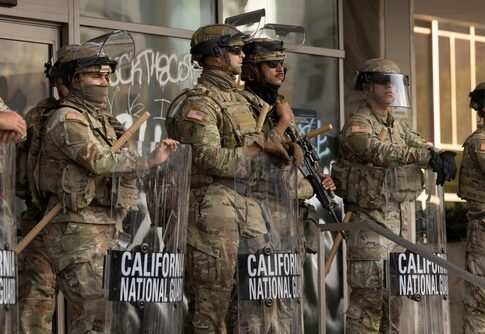
Federal courts have now drawn a clear line: even the President cannot use the military to police American streets, no matter how heated the immigration debate becomes.
Federal Judge Blocks Use of Military in Domestic Law Enforcement
On September 2, 2025, U.S. District Judge Charles Breyer ruled that President Trump’s deployment of National Guard troops to Los Angeles during immigration enforcement protests violated the Posse Comitatus Act, a law that has safeguarded Americans from military involvement in domestic policing since 1878. The judge’s order, which followed a lawsuit from California’s state government, is set to take effect Friday and underscores the constitutional boundaries that even the commander-in-chief must respect when federalizing state guard units.
The Trump administration argued the deployment was legal, claiming the troops were only there to protect federal officers. However, the judge found that their presence in support of Immigration and Customs Enforcement (ICE) operations during protests amounted to direct military involvement in law enforcement activities—precisely what the Posse Comitatus Act prohibits. This dispute highlights the tension between federal authority and states’ rights, especially as California’s Democratic leaders opposed what they labeled as an overreach and a threat to civil liberties and local control.
State Sovereignty and Federal Authority Collide Over Immigration
California’s lawsuit against the Trump administration challenged not just the legality of the deployment but the broader strategy of using military force to enforce federal immigration policy within state borders. The federalization of the California National Guard came amid widespread protests against ICE raids, further fueling controversy over the proper role of the military in American society. This episode echoes previous debates during Trump’s first term, when similar deployments occurred in Washington, D.C., and other cities led by Democratic officials. Each instance has inflamed concerns among conservatives about government overreach, as well as among progressives about the militarization of law enforcement.
Under President Trump, federal immigration enforcement has become more aggressive, with a sharp drop in illegal border crossings and the signing of measures like the Laken Riley Act, which mandates detention of immigrants charged or convicted of certain crimes. These steps have been championed as victories for law and order, though they have also triggered fierce legal and political pushback in states like California that resist federal immigration crackdowns. The resulting standoffs have placed federalism—the delicate balance between state and federal power—squarely at the center of America’s immigration debate.
Legal Precedent and the Path Forward for Conservative Governance
This court decision is more than a setback for the Trump administration’s border security agenda; it is a clear warning to any president tempted to stretch executive power beyond constitutional limits. The Posse Comitatus Act’s restrictions are designed to protect Americans from the dangers of military policing—a concern that resonates deeply with anyone who values individual liberty, the Second Amendment, and a government that respects its own boundaries. Legal experts agree that Judge Breyer’s ruling establishes an important precedent, reinforcing judicial oversight of executive actions and setting the stage for future disputes between Washington and state capitals over immigration policy and law enforcement tactics.
For conservatives, the broader context is critical: the Biden era saw rampant government overreach, open borders, and chaos in cities like Los Angeles. The Trump administration’s efforts to restore order and sovereignty have faced relentless opposition from activist judges and progressive politicians determined to undermine federal enforcement. While the immediate impact of this ruling is limited—troops are not required to withdraw instantly—the long-term implications are profound. The decision will likely embolden states to resist federal directives they see as unconstitutional, ensuring that the battle over immigration, law enforcement, and the limits of presidential authority will continue to shape American politics for years to come.
Trump illegally deployed national guard during LA Ice protests, judge rules https://t.co/hKjdG0GQh2
— The OPEN Daily (@theopendaily) September 2, 2025
Ultimately, this case is a reminder that no matter who occupies the White House, the Constitution remains the final safeguard for American liberties. For those frustrated by years of leftist policies, unchecked spending, and attacks on traditional values, vigilance remains essential. Every attempt to expand government power—whether in the name of security or social justice—deserves careful scrutiny and, when necessary, firm resistance through the courts and the ballot box.