
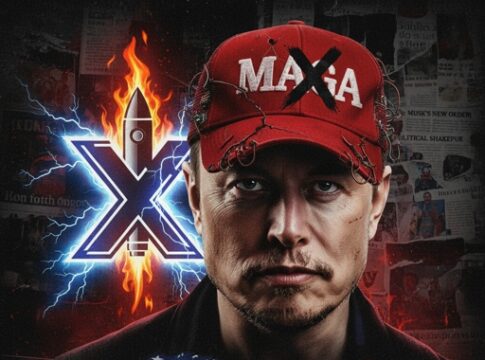
One American billionaire’s online shout-out may have just turned Britain’s already fractured right-wing into a circular firing squad.
Story Snapshot
- Elon Musk publicly backed Rupert Lowe’s new Restore Britain party, instantly elevating a fledgling hard-right challenger.
- Nigel Farage blasted Musk for risking a split in the right-wing vote that could let Labour coast to easy victories.
- Restore Britain emerged directly from a bust-up inside Reform UK and now threatens both Reform and the Conservatives.
- The real fight is less left versus right and more right versus right over who owns the anti-establishment brand.
How a Single Endorsement Turned a Tory Problem into a Right-Wing Cage Match
Elon Musk did not need to step into British politics, but he has, and he picked a side that already infuriates Nigel Farage. Reporting describes Rupert Lowe, a former Reform UK figure and current Member of Parliament, launching Restore Britain as a hard-right party positioned against both Reform UK and the Conservatives.[1] Coverage says the party has Musk’s explicit public support and a clear ambition to field hundreds of candidates, not just a protest slate.[1] That instantly converts a minor internal feud into a national headache for the entire right.
Nigel Farage’s reaction captures what is at stake for the British right. In coverage of the Makerfield and Burnham by-election fights, Farage warns that Musk’s decision to back Lowe will “split the Right” and that Labour will be “delighted” by Restore Britain’s entry.[3] Other reports echo the concern: polling in at least one by-election shows Labour’s Andy Burnham slightly ahead of Reform UK while Restore Britain draws enough support to act as a spoiler for Farage’s party.[2] That is the nightmare scenario under Britain’s first-past-the-post system.
Rupert Lowe’s New Vehicle and the Mechanics of Vote Splitting
Restore Britain is not just a YouTube channel with a logo. Coverage describes Lowe’s project as a formal party with a hard-line platform on immigration and multiculturalism, attracting disaffected Conservatives and elements of the far right.[1] Plans to run hundreds of candidates mean Restore Britain aims to be a standing vehicle in general elections, not a temporary by-election rebel.[1] Under first-past-the-post, even modest shares of the vote in marginal seats can tilt outcomes, so a second insurgent right-wing party naturally alarms both Reform UK and the official Conservative Party.
The risk is straightforward arithmetic, not political theory. If Reform UK consolidates anti-establishment, anti-immigration voters, it can plausibly deny Labour or the Conservatives seats, and in some constituencies Reform might even win. Add Restore Britain, now turbocharged by Musk’s global megaphone, and the same voter pool spreads across two brands. Analysis of the Makerfield contest notes that Restore Britain already polls enough to “take votes off” Reform UK and thereby help Labour hold the seat.[2] That dynamic can replay across dozens of constituencies if this fragmentation continues.
Why Musk’s Intervention Cuts Both Ways for the British Right
Supporters of Restore Britain argue that Musk’s intervention does more than fracture votes; it electrifies disengaged people who never warmed to Farage or the Conservatives. Commentators sympathetic to Lowe say Musk gives moral cover for voters furious about “malign philosophies” in British institutions, and that a bolder vehicle is needed to push for strict immigration controls, mass deportations, and aggressive free-speech protections.[2] From this view, Restore Britain broadens the right’s coalition by reaching people alienated from existing party brands, not just poaching Reform UK loyalists.
This is the woke mind VIRUS at work.
It is still running RIFE in this country but a rival political party is gaining ground.
Restore Britain has been endorsed by Elon Musk.
I SINCERELY hope they win the next general election in 2029….
…. It's our LAST chance! 🇬🇧🇬🇧#maga… pic.twitter.com/vAiDdjyzbg— Ancient Briton Thriving 🇬🇧🇬🇧 (@xsteve) June 6, 2026
The counterpoint, and it is a strong one in American conservative terms, is that enthusiasm without discipline loses winnable contests. Right-of-center voters have watched this movie before. In multi-party systems, every new “pure” vehicle on the right promises to expand the base but often ends up dividing it. The left typically stays structurally unified under Labour in Britain, while the right splinters into Conservatives, Reform, and now Restore Britain. That imbalance rewards ideological satisfaction over practical power.
Brand Ownership, Ego, and the Strategic Conservative View
The deeper struggle is about who owns the anti-establishment brand on the British right. Nigel Farage needs Reform UK to look like the only serious challenger to the establishment, with sufficient discipline and scale to convert anger into seats. Restore Britain presents itself as even more uncompromising, with coverage showing it positioning against both Reform and the Conservatives as insufficiently tough.[1] Musk, by backing Lowe instead of Farage, implicitly sides with this more radical narrative and siphons media attention away from the better-known vehicle.
From a common-sense conservative perspective, the question is not whether Musk has the right to weigh in; of course he does. The real issue is whether his move advances or damages the right’s ability to govern. If Restore Britain and Reform UK do not coordinate, their competition may gift marginal seats to Labour while the right argues over who is the truest defender of the nation. Americans have seen similar dynamics when third-party or protest candidates tip close races to the left; the British right now faces that same structural trap with a Silicon Valley-sized amplifier attached.
Sources:
[1] Web – Elon Musk’s Threat to the British Right
[2] Web – Elon Musk-Backed ‘Restore Britain’ Party Shakes Up UK Polit…
[3] YouTube – Elon Musk Has The Right To Tell Britain What’s ‘Gone Wrong’