
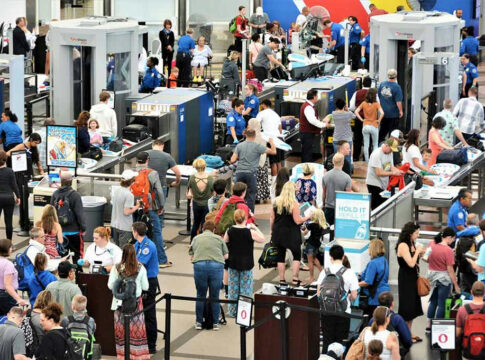
Mandatory Ebola screenings at Atlanta’s airport are giving Americans a crash course in how far federal power can reach when public health, politics, and trust in government all collide.
Story Snapshot
- Hartsfield-Jackson Atlanta International Airport is now a mandatory entry point for Ebola screening for certain travelers returning from Africa.
- Centers for Disease Control and Prevention (CDC) officials frame the move as one “layer” in a broader containment strategy, not a silver bullet.
- Travelers who clear the airport checks face 21 days of state health department monitoring once they get home.
- Supporters see prudent prevention; critics see another example of intrusive, optics-driven policy from a federal system many no longer trust.
What Exactly Changed at Atlanta’s Airport?
Federal health officials have formally added Hartsfield-Jackson Atlanta International Airport as a designated entry point for Americans returning from Ebola-affected countries in central and east Africa.[2][3] The Centers for Disease Control and Prevention (CDC) says enhanced entry screening at Atlanta began just before midnight on May 22, 2026, joining Washington-Dulles International Airport, which started similar procedures two days earlier.[2] Atlanta had run such operations in past outbreaks, so federal authorities describe the shift as reactivating and expanding existing protocols, not inventing them from scratch.[2]
CDC guidance and local reporting explain that United States citizens and permanent residents who have been in the Democratic Republic of the Congo, Uganda, or South Sudan within the previous 21 days must now route through specific airports, including Atlanta, to undergo enhanced screening.[1][2][3][4] Travelers are taken to a separate area where officials take their temperature and ask detailed questions about recent movements and possible exposures.[1][3] Anyone with symptoms or concerning answers is evaluated further, while those cleared to leave the airport are enrolled in follow-up monitoring by health authorities.[3]
Inside the “Layered” Ebola Defense Strategy
The Centers for Disease Control and Prevention describes the Atlanta expansion as one component of a “layered public health approach” to keep Ebola from gaining a foothold in the United States.[2] That framework includes exit screening in affected countries, airline illness reporting during flights, enhanced entry screening at chosen airports, and post-arrival health monitoring once travelers reach their final destinations.[2] Local coverage notes that state health departments monitor cleared travelers for 21 days, the typical Ebola incubation period, after they arrive home.[1][3]
Supporters of this strategy emphasize that the number of incoming travelers from outbreak zones is relatively small and can be concentrated through a handful of airports, allowing a focused use of staff and resources.[2][4] By forcing high-risk travelers through Washington-Dulles and Atlanta, federal officials say they gain better visibility into who is entering, can provide direct education about symptoms, and can hand off people to state health departments with clear contact information.[2][3] CDC officials also stress that the overall risk to the general American public remains “very low,” even as they implement visible precautions at the border.[1]
🚨 Atlanta Airport Triggers Mandatory Ebola Screenings as Deadly Outbreak Threatens U.S. Shores.
Hartsfield-Jackson Atlanta International Airport has activated mandatory Ebola health screenings for travelers arriving from the Democratic Republic of Congo, Uganda, and South…
— End Time Headlines (@EndTimeHeadline) May 26, 2026
Do Screenings Work—or Just Reassure the Public?
Critics and skeptics across the political spectrum question whether adding Atlanta as a second screening hub measurably improves safety compared with the original Washington-Dulles-only plan.[2][3] The available federal materials and news reports do not include a quantitative risk model that estimates how many cases these extra checks are likely to detect, or how often an infected person would still be missed.[2] That lack of published metrics fuels doubts among Americans who already believe Washington favors high-profile gestures over hard-nosed, transparent cost-benefit analysis.[2][3]
News outlets covering the rollout report no confirmed Ebola cases tied to travelers entering through Atlanta during the initial days of screening, reinforcing the official line that the current threat is limited but not zero.[1][3] For many citizens, that raises a familiar question: is this a targeted, time-limited precaution, or another example of federal systems expanding their reach with little accountability once the cameras move on? Some health experts argue that education, quick access to care, and local hospital readiness matter more than temperature checks that can miss early or asymptomatic infections, yet those less-visible investments get far less public attention.[2][3]
Why This Taps Into Deeper Left–Right Frustration
Americans who lean conservative often look at Atlanta’s new checks and see a federal government that failed to control earlier border issues now asserting itself dramatically at an airport.[1][4] They may welcome a tougher stance on potential disease importation, but they also remember times when bureaucracies imposed sweeping rules that hurt small businesses and workers while exempting the well-connected.[1] On the other side, many liberals worry about discriminatory impacts on travelers from African nations and fear that security-first rhetoric can be used to justify broader restrictions on movement and asylum.[3][4]
"Mandatory Ebola screenings have officially expanded to Hartsfield-Jackson Atlanta International Airport for travelers arriving from the DRC, Uganda, and South Sudan. 🚨
Those who pass will still face 21 days of strict symptom monitoring by local health departments.
— Mazi okwuoma (@MaziEzike_Nedu) May 26, 2026
Both groups increasingly share a deeper concern: that decisions like Atlanta’s mandatory screenings are made by a small circle of federal agencies, airlines, and international organizations with minimal transparency and limited input from ordinary citizens.[2][4] The Ebola threat is real and serious for those directly exposed, but the way policies are rolled out—urgent announcements, limited explanation, few hard numbers—feeds a narrative that the “experts” ask for trust without consistently earning it.[1][2][3] For a public already skeptical of elites and weary of crises, Atlanta’s checkpoints have become another test of whether Washington can protect the country without drifting further from its founding promises of limited, accountable government.
Sources:
[1] Web – Ebola-related travel restrictions now include Atlanta’s Hartsfield …
[2] Web – Enhanced Ebola Airport Screening Expands to Atlanta – CDC
[3] Web – US names second airport for Ebola screening as cases in Congo …
[4] Web – Public Health Arrival Restrictions and Enhanced Ebola Screening